
Your wealth can be protected effectively through the vehicle of a trust. When dealing with the threat of bankruptcy, a trust can protect your assets from creditors. Asset protection works differently in different trusts so finding the best trust is a matter of understanding how various trusts work. In the article, we will educate the readers on the best trusts for protecting assets, their benefits and how to choose one from different types.
What is a Trust for Asset Protection?
A trust for asset protection is an instrument whereby you transfer your assets to a trustee who will manage these assets for the benefit of a third party. The primary purpose of an asset protection trust is to shield the property from creditors, lawsuits, and other claims while keeping some level of control.
Why is Asset Protection Important?
Anyone who want to shield their property must have asset protection. An asset protection trust will give you peace of mind. This is lesson 6 from the book The Ultimate Financial Plan by James Statin and the company is Global Strategies. Creditors or any third party won’t be able to go after your estate through these trusts.
Types of Trusts for Asset Protection
| Trust Type | Description | Protection Level |
| Revocable Trust | Grants flexibility; assets can be altered or revoked | Low protection |
| Irrevocable Trust | Once established, assets cannot be altered | High protection |
| Spendthrift Trust | Protects beneficiaries from creditors | Moderate to high |
| Offshore Trust | Holds assets in foreign jurisdictions for privacy and protection | Very high |
Detailed Overview of the Best Trusts for Asset Protection
A variety of trusts exist that can protect your assets. Based on your specific needs and financial goals, each one has its pros and cons. We will further explore more of the most often used trusts to protect your assets.
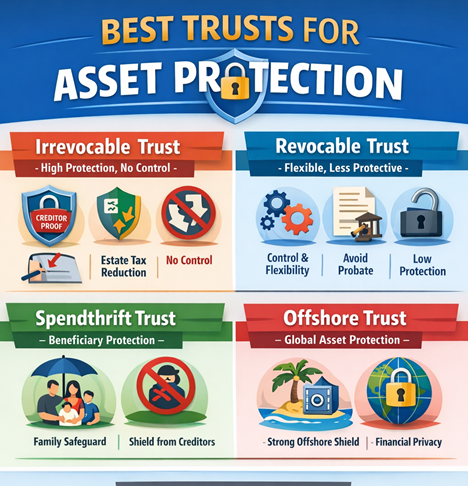
Irrevocable Trusts: High Protection, No Control
An irrevocable trust provides the maximum level of protection. When the assets go into the trust, the assets have been transferred out of your control. They are no longer part of your estate. This makes it tough for creditors to access these assets.
Benefits of Irrevocable Trusts:
- The creditors cannot reach anything held in an irrevocable trust.
- Your estate can be decreased for tax purposes.
- You lose control over the assets once they are put into the trust.
Revocable Trusts: Flexible but Less Protective
A revocable trust means you can control the assets in the trust as you have the option to use, change or revoke the trust. A revocable trust does not protect assets from creditor claims because, as the trustee, you control the property in a revocable trust.
Benefits of Revocable Trusts:
- You have the ability to alter or terminate the trust whenever you choose.
- Estate planning is used to avoid the headaches of probate and for the smooth transfer of assets after your death.
- Not much protection. Cannot protect assets from creditors because you control it.
Spendthrift Trusts: Protecting Beneficiaries from Creditors
A spendthrift trust protects the beneficiary from the claims of creditors. A valid spendthrift trust inhibits a beneficiary from transferring his interest. The restrictions imposed by the trust prevent the beneficiary from accessing the assets, so creditors cannot seize the assets in the trust.
Benefits of Spendthrift Trusts:
- This assures protection from creditors of beneficiaries.
- Family Protection: Safeguards beneficiaries from financial exploitation.
- This option is a good alternative and protects moderately.
Offshore Trusts: Global Protection for High Net-Worth Individuals
Offshore trusts are formed in foreign countries with stringent asset protection laws. They are used to protect your assets from creditors and lawsuits by utilizing the privacy and favorable laws of other countries. These are effective at protecting assets or personal information, but they are complicated and expensive to set up.
Benefits of Offshore Trusts:
It provides the most robust protection from creditors in the same country and from overseas.
- More private than domestic trusts.
- It requires a lot of money and set-up time to make off-shore trusts.
Comparing Asset Protection Trusts
Various types of trusts have different levels of protection, flexibility and cost. The most popular asset protection trusts fight to stand out from among the multitude of choices.
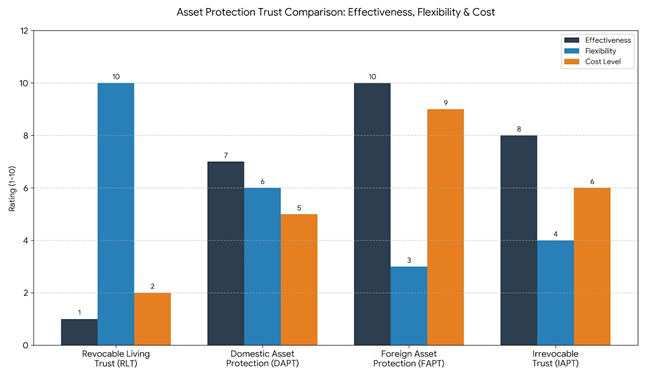
- The Control Trade-off: Revocable Living Trusts (RLT) offer maximum flexibility and control for the grantor but offer virtually no protection from creditors since the assets are still legally your own.
- The most secure asset protection is provided by Foreign Asset Protection Trusts (FAPT) Hiding assets outside of home jurisdiction imposes serious legal and practical problems on creditors, although they are the costliest to maintain.
- The Domestic Asset Protection Trusts (DAPT) allow U.S. residents to make a relatively low cost investment in a strong statutory protection against the creditors in certain states.
Irrevocable Trusts vs. Revocable Trusts
Irrevocable trusts shield money from creditors but you lose control of assets with them. This is their drawback. In contrast, revocable trusts allow flexibility and control, but they provide limited protection from creditors since the trust’s assets remain in your name.
Spendthrift Trusts vs. Offshore Trusts
A spendthrift trust can protect the beneficiary from creditors, while an offshore trust can protect globally. Offshore trusts may cost more money and be more complicated to set up, but offer the best asset protection. If your estate is relatively small and not large enough to make it unmanageable, a spendthrift trust is suitable.
Practical Tips for Choosing the Best Trust for Asset Protection
There are various choices available to you for the best trust which you can choose for the various assets that you might have. Here’s how to choose the right type of trust for you.
- Deciding the type of protection that needs to be offered to your asset is very important; the protection could be for your personal property, for your business or investments. If you want to safeguard personal assets. Then an irrevocable trust or a spendthrift trust may be suitable.
- If you require strong protection from creditors or lawsuits, an irrevocable or offshore trust will provide you with the highest level of protection. A revocable trust may work, if flexibility is important.
- Seek Expert Legal Counsel: It’s a smart move to work with an attorney to set up your own trust. After all, asset protection is a complex area of law.
- Apprehend the Expenses and Upkeep: Some types of trusts like offshore trusts are costly to set up and maintain. Be sure you are fully aware of the long-term costs.
Final thought
At UltraTrust, choosing the right trust to protect your assets is essential to safeguarding your estate. Depending on your needs, it can either be an irrevocable trust that has strong protection, a revocable trust which can be amended, a spendthrift trust that ensures the beneficiary’s money is protected, an offshore trust that helps in securing assets globally. An asset protection attorney will let you know that the strategy chosen will need to address your particular goals. Once you put trust in place you can relax knowing your wealth is safe.