

Choosing the right business structure impacts liability, taxation, and future growth. The Limited Liability Company is one of the most commonly chosen options in the United States. By understanding the LLC Advantages & Benefits, a person is able to determine whether or not it makes sense to launch or restructure a business undertaking.
A limited liability corporation combines corporation and partnership features. It gives liability protection with operational flexibility. This structure is often chosen by small business owners, real estate investors, and consultants. Both new entrepreneurs and experienced investors find its simplicity appealing.
Not every entity type is suitable for every circumstance, but LLCs offer good protection without weighing you down. Nonetheless, creating and adherence is critical. This guide discusses the basics, the differences between entity types and practical considerations to guide you on whether an LLC is right for you.
What to know about an LLC structure
A business entity, that is recognized by law, and that is formed under state law, is called an LLC or limited liability company. It separates your business liability from personal asset That separation shields owners from most debts of the firm.
LLCs set up a formal wall between your personal and business finances unlike sole proprietorships. In case of lawsuits or claims from creditors, it mitigates one’s personal risk. Nevertheless, owners have to handle appropriate paperwork and compliance.
| Feature | LLC | Sole Proprietorship | Corporation |
| Personal Liability Protection | Yes | No | Yes |
| Tax Flexibility | High | Limited | Moderate to complex |
| Administrative Requirements | Moderate | Minimal | Higher |
| Ownership Structure | Flexible | Single owner | Shareholders |
| Ongoing Compliance | Required | Minimal | Extensive |
The understanding of structural foundations helps LLCs operate and complement the asset protection process.
Core LLC Benefits for Business Owners Explained
To understand the advantages and benefits of an LLC, one needs to evaluate its liability, taxation, and operational flexibility.
Protect your personal assets
There is liability separation which is one of the major benefits. Generally, members are not personally liable for debts of business. Your home, savings and personal investments are protected by law.
It is important to keep your personal finances separate from your business finances. Pooling funds might reduce safeguards.
Flexible taxation
LLCs automatically have pass-through taxation. The profits are reported on the members’ individual returns. It helps to avoid commercial double taxation.
Members may also choose to be treated as a corporation for tax purposes when advantageous. This flexibility makes it possible to plan according to income.
Plain Operations
LLCs have less formalities than corporations. Shareholders meeting or complicated reporting mechanism are of no concern.
Key benefits frequently comprise
- Minimal personal responsibility.
- Flow-through taxation.
- Adaptable ownership frameworks.
- Easier administration procedures.
There are elements that strike a balance between protection and efficiency.
Differences between LLCs Corporations and Sole Proprietorships
Choosing an entity type requires analysis of liability and tax issues.
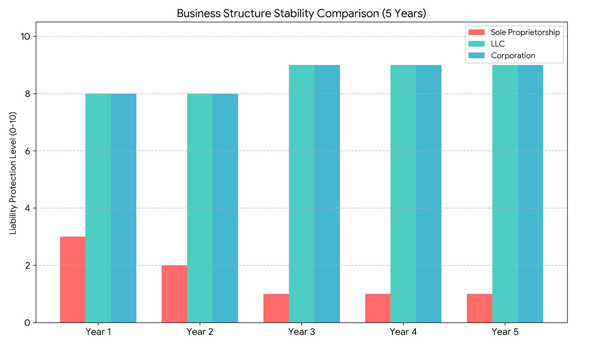
- Over a period of 5 years Sole Proprietorships show a consistent decline in the level of liability protection (In other words, exposure to risk) ranging from moderate (3) to severe (5) levels causing substantial financial loss and depletion of personal assets. Limited liability companies and corporations have a high and stable level of protection.
- Both LLCs and Corporations provide a high level of asset protection so that the business assets are separated from your personal assets. This provides a strong form of protection against lawsuits, unlike a Sole Proprietorship entity.
- While protections are similar, the move to a corporate structure involves far more rules, including annual meetings and a board of directors, than a sole proprietorship, which involves no rules at all.
How to Form and Maintain an LLC
State laws differ on formation. Certain jurisdictions offer favorable filing fees and privacy options. The registration requirements may vary depending on the place of operation.
Make an Operating Agreement
An agreement that outlines the management and ownership structure is an operating agreement. Even one-member LLCs benefit from documented governance.
A well-drafted agreement cuts down on disputes and reinforces separation more effectively.
Think about these steps
- Submit documents for organization.
- Get necessary permissions.
- Use distinct banking accounts for your business.
- Record financial transactions accurately.
Liability protection is preserved by administrative discipline.
Staying Updated: Compliance & Practices
You must file your annual reports and state filings timely. Protection may dissolve on non-compliance.
Keep personal finances separate from the company finances. Recording transparently bolsters legal defense.
Strategically Assessing the Perks & Benefits of LLCs
Learning the advantages and benefits of LLC helps the founders structure their business in an organized manner. LLCs provide personal liability protection, tax flexibility, and operational simplicity.
It limits your personal exposure much more so than a sole proprietorship would. Abstract. It offers comparable protection with less formality than corporations.
Yet, effectiveness is largely reliant on proper composition and compliance. Solid documentation and firm management underpin protective walls.
Many investors and small business owners find that the LLC hits an optimal balance between security and efficiency. UltraTrust supports strategic planning that helps the entity maintain effective day to day operations while ensuring long term financial stability.
The thoughtful selection of entities today builds a foundation for sustainable growth tomorrow.
Common questions about this article
These answers summarize the topic in plain English so readers can move from the article into the next practical planning page.
What is the main takeaway from "LLC Advantages & Benefits: Why Entrepreneurs Choose This Structure"?
Choosing the right business structure impacts liability, taxation, and future growth. The Limited Liability Company is one of the most commonly chosen options in the United States. By… The article is meant to give readers a practical understanding of the issue so they can connect the topic to planning decisions instead of treating it as an isolated legal phrase.
Who should read this article?
This article is usually most useful for readers who are trying to understand LLC Advantages & Benefits before making a trust, ownership, or asset protection decision and want a clearer explanation in everyday language.
Why does this topic matter in broader planning?
Topics like this matter because one misunderstood issue can change how readers think about timing, control, funding, or exposure. Articles like this help turn a broad concern into a more focused next step.
What should readers compare after finishing this article?
Most readers go next to a related trust page, a comparison page, or another article in the same category so they can test the idea against a larger planning framework before deciding what to do next.