

Estate Planning is More Than Document Drafting. It takes careful decisions that influence long-term financial safety. One of the most important steps is Selecting a Trustee who will manage and protect assets according to your wishes. A trustee is responsible for protecting wealth, ensuring compliance and assisting beneficiaries.
Often trust structures are used for asset protection, emergency plan and legacy preservation. However, even the strongest trust can break if mismanaged. The effectiveness of your asset management in uncertain times is dependent on the right trustee selection.
The trustee has to show integrity, competence, and loyalty. When preparing for emergencies or for the future, something must be evaluated. This guide covers the trustee’s responsibilities; the importance of choosing the right option; a comparison of the options; and steps to a decision.
Learning the Duties and Responsibilities of a Trustee
Selecting a Trustee Understanding what the role entails A trustee is the legally responsible party in a trust. The trust protector agreement contains instructions that they must follow.
Trustees act as agents. This means they must prioritize the interests of beneficiaries over their own. They are responsible for managing investments, keeping records, and monitoring distributions.
| Responsibility | Trustee | Executor |
| Asset Management | Ongoing oversight | Limited to estate settlement |
| Fiduciary Duty | Yes | Yes |
| Duration of Role | Long-term or ongoing | Temporary |
| Investment Decisions | Active management | Not typically required |
| Beneficiary Communication | Continuous interaction | Limited interaction |
Trustees oversee assets for long durations. The executor is mainly in charge of distributing the estate after death.
It is crucial to consider when selecting a trustee for the client. It requires consistent competence and reliability over time.
The administration of trusts is more complex with larger asset pools. The Business strategy ensures continuity and safety.
Important Factors when Choosing a Trustee
There are several factors influencing success when selecting a trustee. Balance the expertise and availability, and neutrality of the decision.
Competence in Finances and Law
Trustees usually oversee investments, real estate, or business entities. Knowing how to handle money is important. The value of an asset can be reduced by mismanagement.
It is also important to understand the legal obligations. Trustees must follow the rules and pay taxes.
Typically organize expertise of professional trustees. However, your family members may understand your intentions better.
Honesty and fairness
Evenhanded judgment secures benefit stake. A trustee should steer clear of conflicting interests. It can interfere with justice.
Communicating clearly inspires confidence in beneficiaries. Clear visibility prevents miscommunication.
It is important to evaluate the main characteristics
- Demonstrated money management.
- Robust ethical principles.
- Communication skills are effective.
- Available for long time.
A specific trustee could offer familiarity and insight. Nonetheless, they may lack technical know-how.
Institutional experience and continuity offered by corporate trustees. They work with standard procedures & compliance.
Trustee options: individuals versus companies
Many families must choose between a trusted individual or professional institution in their care. Every option has its pros and cons.
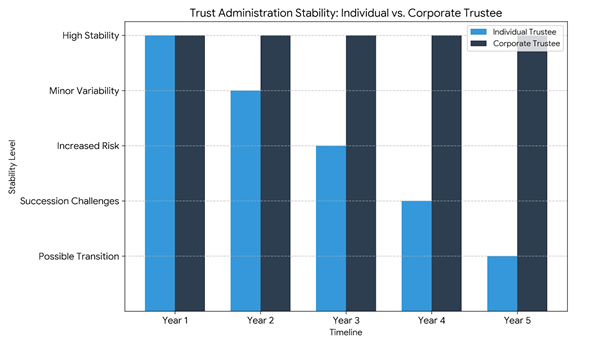
- Corporate Trustees have a consistent High Stability rating over the full five-year period, guaranteed continuity regardless of internal personnel changes.
- The stability of Individual Trustees over time will be predictable, moving from Stable to Increased Risk and Succession Challenges as time passes and circumstances change.
- By year 4 and year 5, individual trustees suffer substantial Succession Challenges; however, the corporate arrangement takes on leadership transitions without disruption to the administration of the trust.
Tips which you should follow to select right trustee
Need for careful planning to select a Trustee.
Assess asset complexity
Professional management may be required for complex investment portfolios. Trusted persons can manage simple compare trusts having minimal assets.
Communicate Expectations Clearly
Be open about responsibilities prior to appointment. Willingness to clarify time commitments and legal obligations.
A written agreement promotes a common understanding. Expectations set out reduces conflict later on.
Think about these selection steps
- Examine credentials and background.
- Determine availability for the long haul.
- Examine charges plans.
- Check with a lawyer before signing.
Expert advice strengthens decision-making.
To sum up, a trustee decision is strategic
When it comes to asset protection planning, selecting a trustee is a vital decision. Beyond administration, a trustee must protect the financial legacy.
With UltraTrust, trustees can understand your individual needs while corporate trustees offer structured expertise and ongoing support. Each option provides unique benefits for effective estate management.
We could reduce risk through a careful assessment of competence, integrity, and availability. Transparent communication is the key to long lasting trust.
Estate planning takes responsibility and forethought. A trustee that protects your assets during a crisis and across generations.
Common questions about this article
These answers summarize the topic in plain English so readers can move from the article into the next practical planning page.
What is the main takeaway from "Selecting a Trustee: A Critical Step in Asset Protection Planning"?
Estate Planning is More Than Document Drafting. It takes careful decisions that influence long-term financial safety. One of the most important steps is Selecting a Trustee who will… The article is meant to give readers a practical understanding of the issue so they can connect the topic to planning decisions instead of treating it as an isolated legal phrase.
Who should read this article?
This article is usually most useful for readers who are trying to understand Selecting a Trustee before making a trust, ownership, or asset protection decision and want a clearer explanation in everyday language.
Why does this topic matter in broader planning?
Topics like this matter because one misunderstood issue can change how readers think about timing, control, funding, or exposure. Articles like this help turn a broad concern into a more focused next step.
What should readers compare after finishing this article?
Most readers go next to a related trust page, a comparison page, or another article in the same category so they can test the idea against a larger planning framework before deciding what to do next.