
When someone dies, their assets do not necessarily go to their heirs. Nevertheless, the majority of estates are subject to probate. Have you like to guess, what is probate? You aren’t alone. Probate refers to the court procedure which takes place after someone dies to show the will is genuine, or real.
While probate has its benefits, it can also be costly and slow. During this time families face red tape. When the court is supervising an estate, it may take months or even years depending on the complexities.
Understanding probate helps with planning. With estate planning, several properties or assets avoid probate. An outline of how it works, how it compares to other options, and tips to avoid complications.
What Is Probate and Why It Matters?
To understand What is Probate, it is helpful to know what it is for. Having it means guaranteeing that a deceased’s debts are paid and leftover property is distributed by law. Court oversight for the executor or administrator is a procedure.
If a will is valid and found, the court will admit it. State laws will distribute the estate under intestacy rules and determine how your assets are divided.
| Situation | With Valid Will | Without Will (Intestate) |
| Executor Appointment | Named in will | Court-appointed administrator |
| Asset Distribution | According to will terms | According to state law |
| Court Supervision | Required | Required |
| Timeline | Several months to years | Often longer |
| Public Record | Yes | Yes |
Estate administration aids creditors as well as heirs. It guarantees fairness, it guarantees legality.
Anyway, this may later take huge time. Legal documents used for court filings, appraisals and other creditor notices.
Key Measures towards the Probate Process
The whole process happens in stages. Every stage guarantees good governance.
Claim Submission
An executor requests a court to allow a will. This opens the estate officially. A will comes into play after the death.
Heirs and creditors are hereby informed. Transparency protects all stakeholders.
Assessment and Review
The executor must seek out all assets. You can own assets like bank accounts, real estate and investments.
The asset may need to be professionally evaluated. Prevention Of Disputes through Assessment.
Debt Distribution and Settlement
Any outstanding debts and taxes should be settled first. Heirs only get leftover or residual assets.
Probate steps typically include
- Submitting legal documents.
- Notifying lenders and inheritors.
- Settling payments and earnings.
- Share of property.
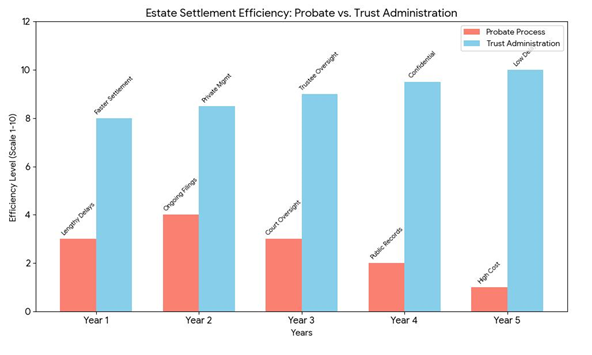
- Probate makes everything long and tedious related to a Will. However, if we use a trust to manage the estate, settlement is certainly quicker.
- The assessment of a trust is performed privately. On the other hand, the process surrounding probate is open for public viewing, as it is overseen by the court.
- When something has to go through it, fees are charged. Plus, with continued filings and ongoing legal fees, the inefficiency of probate over the lifetime of the estate will drive fees higher than the overall continuing delays of trust.
Ways To Reduce probate impact
Although some regions cannot avoid it, others can reduce or mitigate its impact.
Establish a Living Trust
Revocable trust assets are not subject to probate. The trust allocates the assets according to its terms.
Utilize beneficiary designations
The beneficiary can be your name in case of life insurance, retirement plans.
Create an amendable living trust for your benefit
Make sure beneficiary designations reflect your current wishes.
- Share ownership of assets.
- Rearrange estate planning documents.
- The future can be made easy through planning.
- Documentations to be kept clean.
Lack of documents delays probate.
Final Thoughts on Probate Comprehending it for Greater Planning
If you’ve been thinking, what is probate? it refers to the court-supervised process for settling your estate. The process examines wills and pays debts. With UltraTrust, estate planning avoids probate delays, protects assets, and reduces the burden on loved ones through efficient trusts and proper documentation.