
Legal risks can surface at any moment, especially for business owners, professionals, and investors. When a claim appears to be on the horizon, many people search for ways to hide assets before a lawsuit. Although the expression might seem violent, it is actually about legally protecting your assets, not hiding them.
With proper planning, your assets can be structured so that less is available for creditors. Usually your options are limited and the risk goes up if you wait until trial is filed. Last-minute transfers may be fraudulent, say courts meaning you should act early.
Legal barriers are created by assets protection strategies. Your wealth becomes less accessible to creditors because of these barriers. They depend on tools such as trusts, entities, and insurance coverage.
Learning how to legally hide assets before a lawsuit can safeguard your financial future. This guide is an explanation, strategy, comparison, and a practical step.
Understanding what is Hiding Assets?
A lot of confusion arises with the hiding of assets. In legality, it refurnishes ownership and doesn’t hide any wealth.
Legal asset protection refers to using legal structures. This will include trusts, LLCs and exemptions under state law.
Using fraudulent means to transfer or conceal. Such behavior may incur penalties and loss of protection.
Why important timing
The timing of events significantly impacts asset protection. Strategies should be put in place before lawsuits.
When a lawsuit is imminent, courts may reverse transfers. Hence, it is important to plan ahead.
Essential Asset Types to Safeguard
| Asset Type | Risk Level | Recommended Protection Method |
| Real Estate | High | Trusts or LLCs |
| Business Assets | High | Corporate structures |
| Investments | Moderate to High | Diversified ownership |
| Cash Savings | Moderate | Protected accounts or trusts |
By knowing them, you can prioritize protection efforts.
Ways To Safeguard Your Assets
Weaving together many methods makes for a successful asset protection plan. A layer of security is added by each method.
Domestic Asset Protection Trusts
You may place assets under the protection of law with it. The assets are owned by the trust which limited personal liability.
States known for having strong protection laws often use this.
Permanent Trusts
Trusts that can’t be revoked indefinitely take away permanent ownership of the assets. Although it gives strong protection, it takes control.
Types of Business Entities
Creating an LLC or corporation separates business liability from personal liability. This will protect personal assets from attack.
Insurance is the First Line of Defense
Insurance policies can cover costs and damages in court. We don’t need to rely only on structural protection.
Ways to Protect Core
- Create trusts to delineate control.
- Utilize LLCs for all businesses.
- Keep sufficient liability insurance.
- Distribute asset locations and structures.
These strategies generate a potent protection system.
Asset protection is a combination of various tools and knowledge to achieve your goal.
Assessment of Asset Protection Strategies
Different strategies provide different strengths and weaknesses.
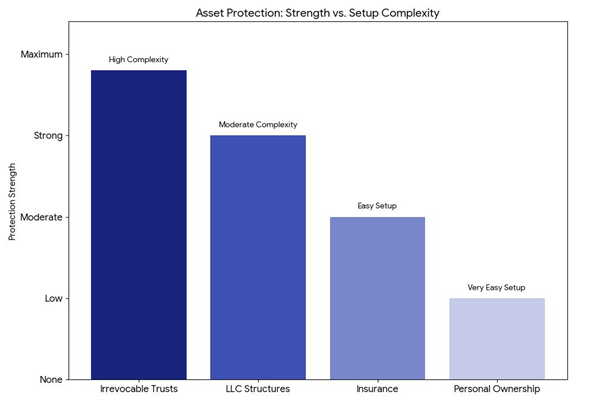
- Irrevocable Trusts offer the most security against claims, but are complex to set up and you lose control over the assets.
- An LLC structure strikes the right balance by protecting your business and real estate assets from liability costs without complicating operations.
- When we think of a risk management strategy, insurance is the first that comes to mind. It is probably the easiest strategy to put into place. They represent an essential first line of defense – however, the wording will often have limits and exclusions on the coverage that the structures do not.
Ways to Create an Asset Protection Plan
Make a plan to do the tasks on time. As you go, your legal position strengthens.
Recognize the risks
Examine potential legal threats associated with your profession or investments. The level of protection required is determined by this.
Ownership must be separated
Keep personal expenses separate from business. This lowers risk exposure.
Put in Place Legal Structures
Trusts or business entities are established based on your needs. Obtain proper records.
Follow the Rules
Make sure records are accurate and updated. It helps you to be safe.
More Tips for Solid Protection
- Prepare in advance before legal issues arise.
- Revise or evaluate approaches consistently.
- Collaborate with legal experts.
- Don’t transfer assets last minute.
These measures could be important for long-term effectiveness.
Protecting Wealth the Right Way
Asset protection is a vital piece of financial planning. It protects wealth from unforeseen legal issues. The secret is to act early and use legal structures effectively. With UltraTrust, tools like trusts, LLCs, and insurance can provide strong layers of protection. Taking no action until a lawsuit arises limits your options, and late actions may be challenged by the court.