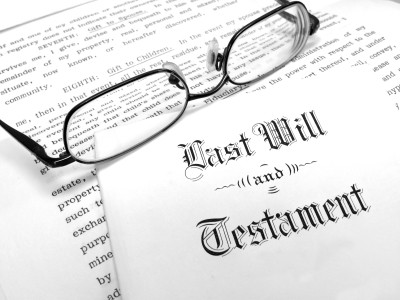
Anna Nicole Smith may have left a will but is a will truly enough to save her baby daughter and the problems that have ensued over the legal battles of her estate?
 With much discomfort I have been forced to watch the Anna Nicole Smith probate proceedings and much more information than I wanted to know about Anna Nicole’s life events. Her reported death is everywhere: on TV, in print, magazines, online and everywhere else you can imagine. The media has made a circus of showing the legal battle going on in open court about the six-year-old will and interpretation thereof.
COULD YOU BE LEAVING THE SAME LEGACY AS ANNA NICOLE SMITH?
Would you want this to happen to you? The legal battles over the Anna Nicole Smith’s estate will go on for years. An unintended myriad of problems and a legacy left behind about her life living and beyond the grave.
A will does not avoid probate. A will does not eliminate the estate tax. If you die with a will or without a will your personal and real property has to go to probate. If you have property in more than one state, each states’ probate court has jurisdiction to probate the will.
What’s probate? Probate is a public process whereby a local court of jurisdiction (probate court) assumes the responsibility of determining who gets what. The court will determine the legitimacy of your will? Was it written with undue influence? Is it the last will? Who is the true executor (i.e. the person who will make the distributions under court jurisdiction)? Did it assign custody for minor children?
The probate court will take inventory of your personal and real property. In addition, the probate court will assign and investigate claims made against your property from potential and real creditors and even assign accountants and lawyers to drag the process.
SO WHY HAVE A WILL? WHAT GOOD IS A WILL?
There are two legitimate reasons for having a will. The will enables:
(1) The assignment of a custodial guardian of minor children.
(2) The assignment of an executor.
The assignment of choosing a guardian for your minor children is the most important aspect of having a will. Choose your custodian well, based on the love of your children as if you were going to be there. Traditionally, you would not choose the executor of your will to be the guardian of your minor children.
There’s a balance to be had between the Executor and the Guardian of your children. The Executor would have some degree of control if there were to be any uncontemplated issues, later in time. All other aspects of the will can be highly contested by anyone having an interest in the outcome of any distributions. Even a very well drafted will becomes a public document and must go to probate in each state where the decedent had property.
Anna Nicole’s will is a public document; even you can get a copy if you’re interested. Final disposition and battle over her estate is going to play before our eyes for years to come. Is this what you would want?
THINGS YOU CAN DO TO AVOID LOSING CONTROL OF YOUR ASSETS
What can you do to avoid the type of media circus over your assets? Can you avoid leaving this painful legacy? An absolute and resounding YES.
Aside from the custody of minor children, a will does not provide any type of safety net over your assets. Only a Trust will avoid this public disclosure of what should be a private matter between you and your assets you leave behind.
A Trust is a Contract. If you choose to be private about your private matter, a Trust, any Trust, will avoid probate; revocable or irrevocable, grantor or non-grantor type Trusts will avoid the probate process. A Trust is not just for the rich. Any one with $200,000 or more should have a Trust.
A perfect Trust for under $500,000 is a living Trust, or a revocable Trust to avoid the probate process. Any one with significant assets should have an Irrevocable Trust. While any Trust will avoid the probate process, only an Irrevocable Trust will avoid the probate process and avoid the inheritance tax or the estate tax.
WHAT’S THE DISTINCTION BETWEEN REVOCABLE AND IRREVOCABLE TRUSTS?
With a Revocable Trust the word “revocable” means that you have sufficient strings to revoke the contract; nullify and void it. While it will avoid going to probate and drag your dirty linen through the public process, it will not avoid the inheritance/estate tax, because on the date of your death you still owned your assets in your name.
For purposes of taxation and civil liability the “revocable” strings attached, means that you did not give up power to control and “own” on a long-term basis your assets; therefore, you are the “deemed” owner of the assets. The Estate Tax is based on what you own in your name at the date of your death. So, the Probate Process is about who gets what; the Estate Tax is about who owns what and what’s it worth for the purpose of taxation.
The estate tax is based on the “fair cash value” of your property of personal estate or real estate at the time of your death not at the time you bought it. Items that are included in your estate are cash, CD’s, real estate, investment accounts, IRA’s, vacation spot, art, jewelry, antiques, boats, planes or anything of value that could be converted to cash or near cash. Only an Irrevocable Trust avoids both the Probate Process and the Estate/Inheritance Tax.
THE IRREVOCABLE TRUST
An Irrevocable Trust is a Contract whereby you give up “any ownership claims” against your assets repositioned/transferred from you to your Irrevocable Trust. The key to dissolve your ownership claims is with an Independent Trustee.
Your “Trustee” must be “independent.” The Trustee cannot be you or any one related to you by blood or marriage. It could be your son-in-law, daughter-in-law, or any in-law, but it would not be prudent. I do not recommend it since it could cause disharmony of your family unit. Death changes people; money changes people. It’s not worth the risk of forever splitting your family for the love of money. Choose your independent Trustee well.
As mentioned before, no matter how well drafted, a will must go to probate where it becomes a public document for every interested party to view and review. The only method of avoiding the probate process is to have your possessions and valuable assets titled to a Trust.
Though the tragedy of Anna Nicole Smith and her baby daughter’s plight cannot now be avoided, we can learn from this situation and apply remedial steps to our own life. Here are some things for you to consider in your life:
- All Trusts, revocable or irrevocable, grantor or non-grantor avoid Probate.
- A will does NOT avoid Probate.
- A will does NOT avoid Estate Taxes.
- Only an “Irrevocable Trust” avoids Estate/Inheritance Taxes.
To learn more about how you can prevent Anna Nicole Smith’s situation, safeguard your assets, and discuss your situation about wills, estate taxes, probate, irrevocable trusts and implement a solid asset protection system call Estate Street Partners toll-free 888-93-ULTRA (888-938-5872).
Helpful resources: Common follow-up reading includes Asset Protection Trust, Revocable vs Irrevocable Trust, and official IRS estate and gift tax guidance before making final trust-planning decisions.
Where the next decision becomes clearer
Once Annuity: Fixed, Variable, Equity-Based Annuity: Deferred, Immediate Annuity is on the table, the next questions usually center on risk, flexibility, and which planning step deserves attention first.
Points readers weigh before moving forward
- Timing matters because planning choices usually become narrower once a problem is already close.
- Control matters because the answer often depends on how much access or authority the owner wants to keep.
- Funding matters because a trust or entity has to be set up and maintained correctly to matter.
Practical reading path
To keep the next step practical rather than abstract, readers often move to Asset Protection Trust, Irrevocable Trust, and How It Works. When the question turns from reading to implementation, many readers move from these guides to a direct planning conversation.