
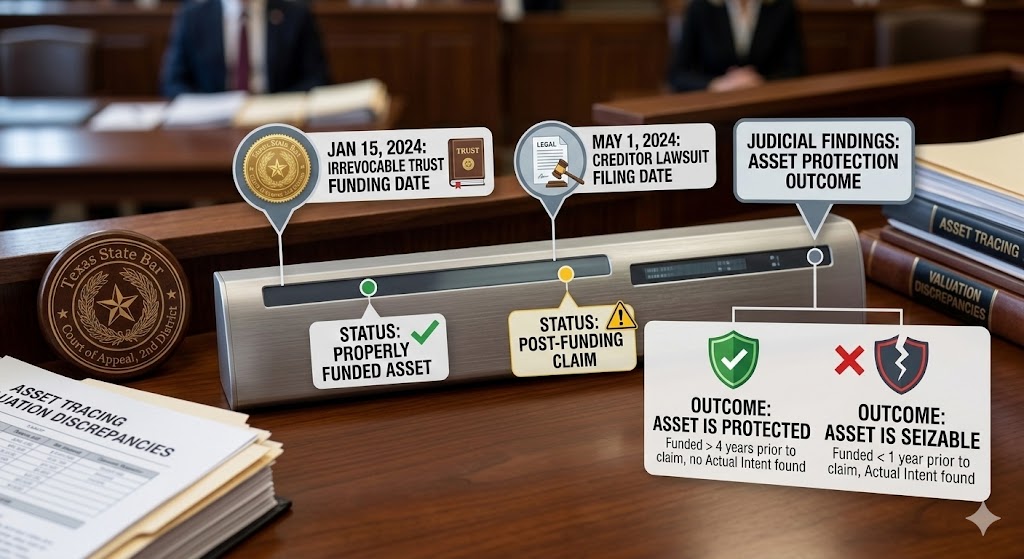
- Business owners face personal liability from two directions: direct personal liability and pierced entity liability — and an LLC alone does not fully address either.
- Genuine personal wealth protection requires three overlapping layers: business entity formation, charging order protection, and an irrevocable trust.
- The most powerful configuration places LLC membership interests inside an irrevocable trust — creating a structure creditors have no direct legal path to penetrate.
- Personal guarantees on business loans, leases, and vendor contracts create personal exposure that no entity structure eliminates — only pre-guarantee irrevocable trust planning does.
- The UltraTrust® system integrates all three protection layers into a single coordinated legal architecture, designed and administered by Estate Street Partners across 40+ years of practice.
If something goes wrong with your business — a lawsuit, a contract dispute, an employee claim, a regulatory action — does it take your personal wealth down with it? For most business owners, the honest answer is: it depends entirely on how you’ve structured your protection. A properly maintained LLC creates a first line of defense, but entity protection alone has well-documented failure points. Charging order protection adds a second layer, but only covers the LLC interest itself — not your personal bank accounts, home, or investment portfolio. The irrevocable trust is the third and most durable layer: the legal structure that removes personal assets from creditor reach entirely by placing them in a separate legal entity you no longer personally own. Estate Street Partners designs the UltraTrust® specifically to integrate all three layers into a coordinated architecture — so that a bad outcome in the business, however painful, cannot destroy what you’ve built personally for your family.
What Are the Two Types of Personal Liability Every Business Owner Faces?
Business owners face personal liability from two distinct directions. A sound protection strategy must address both — because each requires a different legal response.
Direct personal liability arises when the business’s legal form provides no protection because the claim runs against you individually. If you personally commit a tort — fraud, professional negligence, misrepresentation — the business entity is irrelevant. The claim is against you, not the LLC. Similarly, if you personally guarantee a business obligation — a commercial lease, a business loan, a vendor contract — you are personally on the hook if the business cannot pay, regardless of what entity holds the underlying obligation. In practice, most commercial lenders, landlords, and major vendors require personal guarantees from small and mid-sized business owners as a condition of doing business. This means nearly every business owner carries meaningful personal exposure that exists entirely outside any entity structure.
Pierced entity liability arises when a court disregards the LLC or corporation and holds the owner personally responsible for a business debt or judgment. Courts pierce the corporate veil when owners fail to maintain entity formalities — no separate bank accounts, commingled funds, no corporate minutes — when the entity is inadequately capitalized for its foreseeable obligations, when fraud or misrepresentation is involved in the entity’s use, or when the owner personally participated in a tortious act committed through the entity.
The combination of these two liability channels means that virtually every business owner has meaningful personal exposure that a business entity alone cannot address.
❓ Q: Does an LLC protect my personal assets from a business lawsuit?
A: An LLC limits your personal liability for business debts and judgments — but only under specific conditions and with important exceptions. When properly maintained, an LLC prevents a creditor of the business from collecting a business judgment from your personal bank account, home, or investment portfolio. However, this protection disappears in several common situations: if you have personally guaranteed the business obligation, if a court pierces the corporate veil due to failure to maintain entity formalities, or if the claim runs against you personally rather than against the business. In practice, most business owners have personally guaranteed at least their commercial lease and their primary business loan — which means those obligations reach you personally regardless of your LLC. Estate Street Partners addresses this gap directly in every UltraTrust® engagement by identifying which personal guarantee obligations exist, when they were incurred, and which personal assets need irrevocable trust protection before new guarantees are signed.
❓ Q: What does it mean to pierce the corporate veil and how do I prevent it?
A: Piercing the corporate veil is a legal doctrine that allows a court to disregard the LLC or corporation as a separate legal entity and hold the owner personally responsible for the entity’s debts or judgments. Courts apply this doctrine when they find the entity was not genuinely operated as a separate legal person — most commonly because the owner commingled personal and business funds, failed to maintain separate bank accounts, did not keep required records or meeting minutes, signed contracts personally rather than as an officer or member, or operated an undercapitalized entity that could not realistically cover its foreseeable liabilities. Preventing piercing requires consistent operational discipline: separate accounts, entity-signed contracts, annual records, adequate capitalization, and no treating the business as a personal piggy bank. Even with perfect entity maintenance, however, direct personal liability and personal guarantees remain — which is why the UltraTrust® layer addresses the personal asset exposure that entity formalities alone cannot eliminate.
How Does Charging Order Protection Work and Where Does It Fall Short?
Charging order protection is one of the most important — and most misunderstood — protections available to LLC owners facing personal creditor claims.
When a creditor obtains a judgment against you personally and you own a membership interest in an LLC, the creditor cannot simply seize your LLC interest, sell it, assume management control, or compel the LLC to make distributions. In most states, the creditor’s exclusive remedy is a charging order — a court order entitling the creditor to receive any distributions the LLC makes to you, if and when the LLC chooses to make them. The creditor receives no voting rights, no management rights, and no ability to force a distribution.
In states with the strongest charging order protection — Nevada, Wyoming, Delaware, and South Dakota — this creates an effective legal standoff. The creditor holds a paper right to distributions that a discretionary manager has no obligation to make. Many creditors in this position accept discounted settlements rather than wait indefinitely.
However, charging order protection has four significant limitations that every business owner must understand:
Not all states provide exclusive charging order remedies. Some states allow a creditor to foreclose on the membership interest entirely — stepping into the member’s shoes as a full owner with management rights. California, Florida, and New York — three of the largest business states — do not provide the strong charging order protections that Nevada or Wyoming do.
Single-member LLCs receive weaker protection. Multi-member LLCs generally receive stronger charging order protection than single-member LLCs in most jurisdictions, because courts are more willing to limit a creditor’s remedy when other members’ interests are at stake.
Charging order protection is LLC-level protection only. It protects the LLC interest from a personal creditor — it does not protect your personal bank accounts, personal real estate, or investment portfolios from that same creditor. A judgment creditor who cannot reach your LLC interest will simply pursue every other personal asset you own.
It does not address direct personal liability. Charging order protection is irrelevant when the claim runs against you personally — a personal guarantee, a personal tort, or a pierced-entity judgment.
❓ Q: What states have the strongest charging order protection for LLC owners?
A: Nevada, Wyoming, Delaware, and South Dakota are consistently rated the most favorable charging order states. Nevada and Wyoming statutes explicitly make the charging order the exclusive remedy for a personal creditor of an LLC member — meaning a creditor cannot foreclose on the membership interest or seek any remedy beyond waiting for distributions. Delaware’s charging order statute is similarly protective for multi-member LLCs, and South Dakota combines strong charging order law with favorable trust law that integrates well with the overall UltraTrust® architecture. By contrast, California does not provide an exclusive charging order remedy, and its courts have in some cases allowed creditors to foreclose on LLC interests. For business owners in less favorable charging order states, the irrevocable trust layer becomes even more critical — because the trust places the LLC membership interests themselves in a separate legal entity that personal creditors cannot reach regardless of the state’s charging order law.
❓ Q: If charging order protection limits creditors to waiting for distributions, can’t I just never make distributions?
A: In theory, yes — a discretionary manager of a properly structured LLC can decline to make distributions, leaving a charging order creditor with nothing to collect. In practice, this strategy has important limitations. First, some courts — particularly in states without exclusive charging order statutes — have been willing to appoint a receiver or order distributions when they find the non-distribution policy is designed purely to frustrate the creditor rather than serve a legitimate business purpose. Second, this strategy requires you to leave money inside the LLC indefinitely, which has tax and operational consequences. Third, it does nothing to protect personal assets you already hold outside the LLC. The irrevocable trust layer addresses all of these limitations by placing both the LLC interests and your personal assets in a separate legal entity — so the question of distributions becomes largely irrelevant to your personal protection.
Why Is an Irrevocable Trust the Most Durable Layer of Personal Asset Protection for Business Owners?
When a business owner holds personal assets — investment accounts, a home, personal real estate, accumulated savings — in their own name, those assets are exposed to every personal judgment ever entered against them, from any source. A slip-and-fall on a rental property, an employment discrimination verdict, a partnership dispute that generates a personal judgment, a pierced-entity business claim — all of these can reach personally held assets.
The irrevocable trust removes this exposure at its root. When assets are properly transferred to a non-self-settled irrevocable trust — one that benefits the owner’s spouse, children, or other family members — those assets belong to the trust, a separate legal entity. They are no longer the grantor’s property in the legal sense that matters to creditors. A judgment against the grantor personally cannot reach assets the grantor does not own.
For business owners, the typical UltraTrust® structure holds income-producing personal assets — investment accounts, personal real estate outside the business, non-business savings — in the trust for the benefit of family members. The business entity structure operates alongside the trust, not inside it, depending on tax and operational considerations. The result is a clean separation between business risk and personal wealth that survives even worst-case business outcomes.
The integrated LLC-inside-trust architecture represents the most powerful configuration available. At the LLC level, business liabilities are contained within the entity and charging order protection limits personal creditor reach. At the trust level, the LLC membership interests are owned by the trust — not by the individual — so a personal creditor cannot reach them regardless of the state’s charging order law. Combined, a judgment creditor against the individual owner has no direct legal path to either the business assets or the personal assets. Their only option is fraudulent conveyance litigation — which requires meeting a high legal standard that a properly timed, properly documented UltraTrust® is specifically designed to defeat.
❓ Q: Can I put my LLC inside an irrevocable trust to protect both business and personal assets?
A: Yes — and this integrated structure is the standard architecture Estate Street Partners designs for business owners with significant personal wealth. When LLC membership interests are held by a non-self-settled irrevocable trust, a personal creditor of the business owner faces two separate legal barriers: the LLC’s charging order protection at the entity level, and the trust’s spendthrift provision at the ownership level. To reach either the LLC assets or the trust’s other assets, the creditor must first unwind the trust transfer through fraudulent conveyance litigation — a high legal standard that requires proving the transfer was made with actual or constructive intent to defraud a specific creditor. A UltraTrust® funded during a period of legal calm, with full solvency documentation and independent trustee administration, presents an extremely difficult fraudulent conveyance target. The integrated LLC-inside-trust structure has been tested and upheld in courts across the country and is used routinely by sophisticated business owners and estate planners.
❓ Q: What personal assets should a business owner put in an irrevocable trust?
A: The personal assets most important to protect in an irrevocable trust are those that represent accumulated personal wealth outside the business — investment and brokerage accounts, personal real estate not used in the business, cash savings, and any other assets held in personal name that creditors could reach through a personal judgment. Business owners with investment real estate portfolios should consider holding each property (or property cluster) in a separate LLC, with those LLCs held within the irrevocable trust — separating each property’s liability from the others while placing the overall equity outside personal creditor reach. Assets the business owner needs for day-to-day operations or liquidity should generally remain accessible, while longer-term wealth — retirement-adjacent savings, appreciating real estate, investment portfolios — represents the highest-priority transfer candidates for UltraTrust® planning.
How Do Personal Guarantees Create Business Owner Liability That Only an Irrevocable Trust Can Address?
Personal guarantees are the most frustrating and least avoidable source of personal liability for business owners. Commercial lenders, commercial landlords, and major vendors routinely require personal guarantees before extending credit or entering contracts with small and mid-sized businesses. Once signed, a personal guarantee makes the owner personally liable for the full obligation if the business cannot pay — regardless of the LLC structure, regardless of corporate formalities, regardless of any other protective measure.
The critical question is: does an irrevocable trust protect against a personal guarantee?
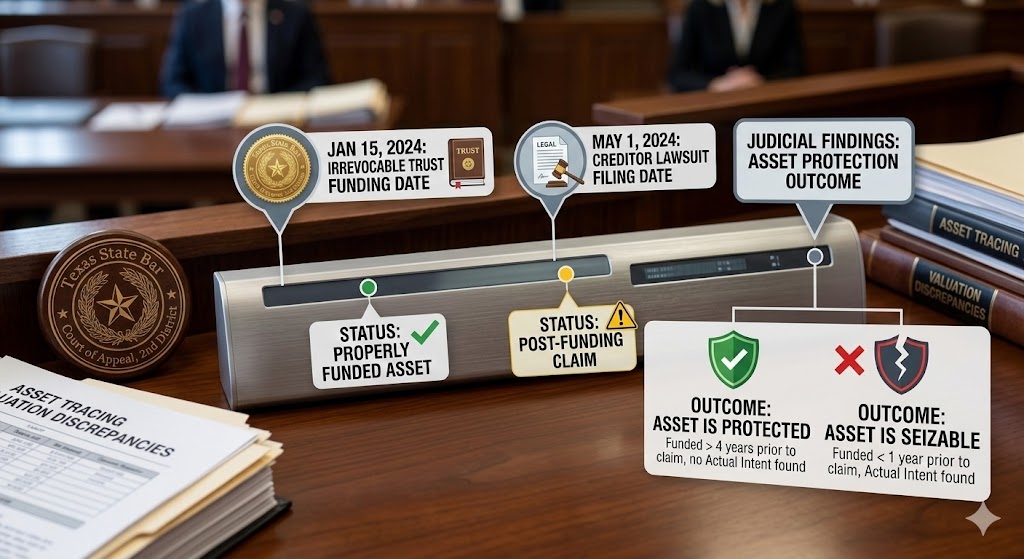
The answer is entirely a function of timing. A trust funded before the personal guarantee was signed — before that creditor relationship existed — is generally protected from fraudulent conveyance attack, provided the grantor was solvent at the time of funding and the transfer was not made with intent to defraud. Under the Uniform Voidable Transactions Act (UVTA) § 4, a transfer made before a creditor relationship arises is not a transfer made to hinder or defraud that creditor — because that creditor did not yet exist.
A trust funded after the personal guarantee was signed — particularly if the business was struggling when the trust was funded — is exactly the kind of transfer that fraudulent conveyance law was designed to unwind. Courts will examine the timeline, the grantor’s financial condition at the time of funding, and whether any existing creditors were being defrauded.
This is the decisive argument for early planning. Business owners who anticipate signing personal guarantees in the future — which is essentially all business owners — must fund an irrevocable trust during periods of financial strength, before major guarantee obligations are incurred. The window for clean, legally defensible trust funding closes the moment a significant creditor relationship becomes foreseeable.
❓ Q: Does an irrevocable trust protect against an employment lawsuit or EEOC claim against me personally?
A: Yes — provided the trust was funded before the employment claim arose. Employment-related claims are one of the most common and least anticipated sources of personal liability for business owners. An EEOC discrimination complaint, a sexual harassment allegation, a wage-and-hour class action, or a wrongful termination claim can generate personal liability when the owner’s own conduct is at issue — sexual harassment, for example, is treated as a personal act, not a corporate one, regardless of the business entity involved. Employment practices liability insurance (EPLI) provides some protection but carries limits, exclusions, and the possibility of a verdict that exceeds coverage. For a business owner with significant personal wealth, personally held assets are the “deep pocket” that employment plaintiffs’ attorneys target. A UltraTrust® funded before any employment claim is anticipated places those assets beyond the reach of any employment judgment creditor — the same way it protects against any other personal creditor.
❓ Q: When is the right time for a business owner to fund an irrevocable trust?
A: The right time is during a period of complete legal and financial calm — no active litigation, no known creditor disputes, no obviously imminent claims, and no recently signed personal guarantees that are under stress. Specifically, the ideal planning windows for business owners are: before entering into significant new personal guarantees; immediately after a major liquidity event such as a business sale or large distribution; before taking on new high-liability business activities such as entering a new market, significantly expanding headcount, or taking on major government contracts; and before any known high-risk business relationship begins. Each of these windows represents a period when a fraudulent conveyance challenge would be extremely difficult to sustain: no existing creditors are being defrauded, the grantor is demonstrably solvent, and the estate planning purpose of the transfer is clearly established by the surrounding circumstances. Estate Street Partners can typically complete a fully documented UltraTrust® engagement within 30 to 60 days from initial consultation to funded trust.
What Does the Complete Business Owner Asset Protection Architecture Look Like?
The most legally durable protection for a business owner with significant personal wealth uses three overlapping layers — each reinforcing the others, none relied upon alone.
Layer 1 — Business entity with proper formalities. An LLC or corporation creates the first barrier between business liabilities and personal assets. Maintained correctly — separate accounts, entity-signed contracts, annual records, adequate capitalization — it prevents business creditors from reaching personal assets through the entity itself.
Layer 2 — Charging order protection. In states with strong charging order statutes, a personal creditor who obtains a judgment against the owner cannot seize LLC membership interests, assume management control, or force distributions. They receive only a paper right to wait — creating leverage for discounted settlement and protecting the business from disruption.
Layer 3 — Non-self-settled irrevocable trust. Personal assets — investment accounts, personal real estate, accumulated savings — held in a properly structured UltraTrust® belong to a separate legal entity. A personal judgment against the grantor has no legal path to those assets. Combined with the LLC layer, a creditor faces two separate legal barriers with no direct path through either.
Estate Street Partners begins every UltraTrust® business owner engagement with a complete review of existing entity structure, personal guarantee exposure, insurance coverage, and asset allocation. Rocco Beatrice and his team identify the assets most at risk, the timing considerations for each transfer, and the tax implications of each element — then build the integrated architecture designed to survive exactly the kind of creditor pressure that the business owner’s specific liability profile generates.
❓ Q: How long does it take to set up an irrevocable trust for a business owner and what does the process involve?
A: Estate Street Partners can typically complete a fully documented UltraTrust® engagement within 30 to 60 days from initial consultation to fully funded trust, depending on asset complexity and the number of entities involved. The process begins with a complete liability and asset review — identifying existing personal guarantees, current entity structures, insurance coverage, and the personal assets most exposed to creditor risk. From that review, the team designs the optimal trust structure, identifies the correct jurisdiction and trustee, prepares all trust and funding documentation, and manages the transfer of each asset class into the trust with contemporaneous solvency documentation. Deeds are recorded, accounts are retitled, and all transfers are confirmed in writing. Ongoing administration — annual trustee resolutions, accountings, distribution analyses — is built into the engagement from the start, because a trust that is not properly administered over time is a trust that will not survive litigation scrutiny when it matters most.
❓ Q: What happens to my irrevocable trust if my business fails completely?
A: If your business fails and creditors pursue personal judgments against you, the irrevocable trust operates exactly as designed — assets held in the trust belong to the trust, not to you personally, and a personal judgment cannot reach them. This is the scenario the trust was built to address. The business failure itself — debts of the LLC, obligations of the corporation — is addressed at the entity level. Only obligations that pierce the entity or run against you personally create risk to personal assets, and those are precisely the assets the UltraTrust® holds. The critical caveat is timing: assets transferred to the trust before business problems became foreseeable are protected. Assets you attempt to transfer after receiving a demand letter or after a business relationship begins deteriorating are subject to fraudulent conveyance attack. This is why Estate Street Partners consistently emphasizes planning during periods of financial strength — not as a reaction to emerging problems.
Last Updated: March 2026. This article reflects current federal and state law as of the publication date, including the Uniform Voidable Transactions Act and applicable LLC statutes. This article is for general educational purposes only and does not constitute legal, tax, or financial advice. Consult Estate Street Partners for a case-specific analysis of your business owner asset protection position.