

When it comes to trusts, the terms settlor vs grantor are used interchangeably but knowing the difference between them is important. The two terms refer to a person who creates a trust to transfer the asset with the intention that it shall benefit a beneficiary. Nonetheless, their usage might differ depending on the applicable law, legal context, and kind of trust.
Understanding these functions helps individuals set up irrevocable or revocable trusts for the right reasons, and with the appropriate legal protection. Through definitions, differences, uses and practical advice, the article reveals how to effectively set up your trusts, so that you can minimize the risks and maximize the benefits.
The settlor and grantor are identical entities
The settlor is the person who transfers the assets into the trust and takes care to define the terms of the trust and identify the beneficiaries. This term is typically used in UK, Canadian, and international trust law.
Most Common (U.S. Law) A grantor also creates a trust, and in a revocable trust may retain certain powers.
Main tasks are
- Assets are transferred to trust.
- Select people to manage assets.
- Determining applicable beneficiaries and rule conditions.
The classification is important as it impacts tax rules, legal responsibilities, and property control. The use of the terms ’settlor’ and ’grantor’ can affect cross jurisdictional trust interpretation.
Essential in Estate Planning
- It is important to identify your Asset Protection to protect them against creditors.
- Tax Efficiency: Settlor or grantor trusts may have different rules.
- Trust Management: Which clarifies the powers and duties of trustees.
- Retained jurisdiction over control term meaning.
The person who sets up a trust
By gaining a proper understanding of these fundamental principles, one can set up a legally sound and efficient trust.

Law Distinctions
The terms settlor and grantor are used interchangeably although there exists a subtle difference.
A Settlor Trust is typically an irrevocable trust. The settlor truly loses control over trust assets.
Grantor Trusts– Generally revocable in the United States, it may allow the grantor to modify, revoke or receive income.
Duties and Responsibilities
- Designating trust managers for trust assets.
- Explaining the terms for beneficiaries’ distributions.
- Making sure to comply with local trust laws.
Taxation, legal protection and government benefits are affected by these differences.
Different Types of Trusts
A revocable trust, also known as a grantor trust, is one where the grantor retains power over it and may revoke it anytime.
In order to achieve objectives, such as minimizing estate taxes, protecting assets from creditors, etc., choose the right type.
Analysis and Illustration
| Feature | Settlor | Grantor |
| Jurisdiction | UK, Canada | USA |
| Control After Transfer | Minimal/none | Retains some control |
| Tax Implications | Depends on local law | May be taxed as part of grantor’s income |
| Asset Protection | High | Moderate depending on trust type |
Case History
A wealthy person used a settlor trust in Canada to.
- Business assets transfer.
- Shield assets against upcoming creditors.
- Make sure family members get income distributions.
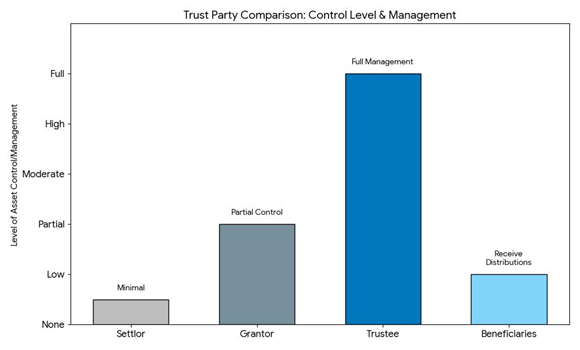
- The Trustee is the ultimate authority in respect of a Trust and the management of all the assets of the Trust is his responsibility, so that the assets are handled as per the legal document.
- Trusts can be set up on either a fixed or variable retention basis with the latter being the preferred option at present. What does this mean? A Grantor will retain some control of the trust assets thus allowing for some participation while also ensuring that the trust is a separate legal entity.
- In many trust structures, once the trust is established and funded, the Settlor’s ongoing control is minimal as the emphasis is on the creation of the trust and not with ongoing control.
How to Choose and Use Trusts
Instruction Manual
Determine your objectives. Do you want to protect an Asset, plan your estate, or become tax efficient?
- Select a trusted individual or entity as a Trustee
- Make your intentions clear regarding control, distributions and powers.
- Legally fund the trust as per the terms by transferring assets.
How to Manage Trust Efficiently
Consider working with a local estate planning attorney. It is important to periodically review and update trust to reflect changes in assets or family situation.
Final thought
While both create trusts, differences in jurisdiction, control, and tax treatment shape the strategy. UltraTrust highlights that settlor trusts offer stronger asset protection and are typically irrevocable, while grantor trusts provide more flexibility and control under U.S. law.
Selecting the correct type of trust and clearly defining the roles ensures the regulated management of assets and the protection of beneficiaries. Individuals can take advantage of t with proper planning.
Common questions about this article
These answers summarize the topic in plain English so readers can move from the article into the next practical planning page.
What is the main takeaway from "Settlor vs Grantor: Understanding the Key Differences in Trusts"?
When it comes to trusts, the terms settlor vs grantor are used interchangeably but knowing the difference between them is important. The two terms refer to a person… The article is meant to give readers a practical understanding of the issue so they can connect the topic to planning decisions instead of treating it as an isolated legal phrase.
Who should read this article?
This article is usually most useful for readers who are trying to understand Settlor vs Grantor before making a trust, ownership, or asset protection decision and want a clearer explanation in everyday language.
Why does this topic matter in broader planning?
Topics like this matter because one misunderstood issue can change how readers think about timing, control, funding, or exposure. Articles like this help turn a broad concern into a more focused next step.
What should readers compare after finishing this article?
Most readers go next to a related trust page, a comparison page, or another article in the same category so they can test the idea against a larger planning framework before deciding what to do next.
