

Trusts can be utilized for estate planning, wealth management and asset protection. But, not everyone can fully understand the jobs. Many wonder about trustee vs grantor, two similar-sounding yet distinct names. What are the differences?
Each entity serves an important role in the management and protection of a trust’s assets. The individual establishing the trust puts it in place. The trust’s terms will govern the asset management by the trustee. Although this sounds easy, the responsibilities and legal implications may be complicated.
Anyone setting up or managing a trust should understand the role of these administrators. It maintains proper control, compliance, and long-term financial viability.
What do the terms grantor and trustee mean?
The grantor and the trustee are the two most important parties to a trust The goals of each provide the trust with a defined function.
What is a Grantor?
The grantor creates the trust. The person putting the assets into the trust and setting the rules up.
The grantor decides how the assets will be managed and when they will be distributed. Sometimes, the grantor may also act as the trust’s trustee.
What is a Trustee?
Trustee administer the assets of the trust. Involves decisions, investments and distribution of the assets.
A trustee must operate in the best interest of their beneficiary. It has legal and fiduciary responsibilities.
| Role | Primary Function | Responsibility Level |
| Grantor | Creates the trust and funds it | Strategic control |
| Trustee | Manages and administers the trust | Operational responsibility |
| Beneficiary | Receives benefits from the trust | No management duties |
A thorough knowledge of the trustee vs grantor basics is essential.
Defined Relationship – Competition Law
Both roles carry important responsibilities which affect the success of the trust. Awareness of these responsibilities helps in avoiding disputes.
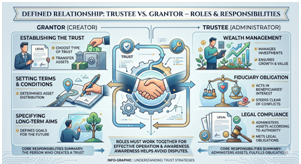
Establishing and Finacing the Trust
The grantor chooses a type of trust and transfers assets into it. This step will determine how the trust will operate.
Setting Conditions and Terms
The grantor determines the distribution of assets. The trustee’s actions are governed the instructions.
Wealth Management
The trustee manages the investments of the trust and ensures the assets grow or at least do not decline in value. Making a Decision Requires Financial Knowledge.
Fiduciary obligation
The trustee must act in the interest of the beneficiaries. That is steering clear of conflicts.
Summary of Core Responsibilities
- The person who creates a trust
- Trustee who administers assets according to authority.
- Trustee makes sure legal obligations are met.
- Grantor specifies long-term aims.
In order for the trust to operate effectively, those roles must work together.
It’s important to know the difference between trustee vs grantor to implement trust strategies correctly.
Trustee vs Grantor: Key Differences Explanation
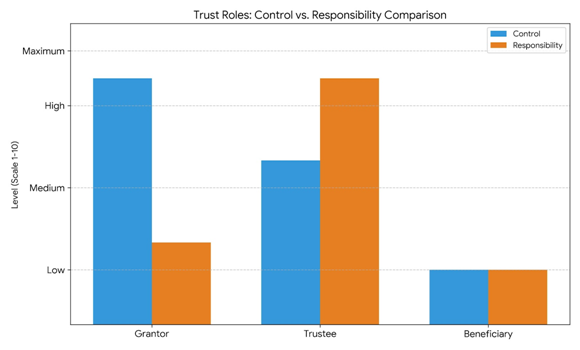
a comprehensive understanding of how trusts work can be attained by comparing these roles.
- As the Grantor comes under the most initial control; he first states the trust and selects its first goals.
- Often trustee have operational control but the trustee’s more burdensome duty is to continue that is duty of compliance and duty of due care.
- The initial setup control (Grantor) often has a clear inverse relationship to long-term administrative responsibility (Trustee).
Trustee Vs Grantor – Which One You Should Choose?
Selection of a trustee is a key and critical decision. It impacts the performance and compliance of the trust.
Elements for Contemplation
How financially skilled must you be?
- Intricacy of the trust setup.
- Need for Independence and Objectivity
- Sustained administration needs.
- Trusteeship selection is affected by such factors.
Examine Your Goals
Decide if you want full control or professional management. This helps to identify your role as the grantor.
Assess Scaffold Options
It’s your choice to select an individual or a corporate trustee. Both are good but in their own way.
Make sure trustee understands fiduciary duty. It lowers the chances of any legal troubles.
Prepare for Continuity
- Select a trustee that can administer the trust long-term. This provides assurance.
- Choosing the right framework underpins your trust strategy.
- Knowing the Difference Between Trustee vs Grantor Will Help You Decide.
To clarify ambiguity in roles
Trusts can be great ways to protect and manage any kind of wealth. The success of this depends on specific roles.
The creation and structuring of the trust are handle by the grantor, while UltraTrust ensures that trustees effectively manage the assets and follow the trust’s terms. The success of a trust depends on both functions, and failure to grasp these responsibilities can lead to complications.
Understanding trustee versus grantor differences can enhance your trust structure and make it more effective. It assists in maintaining your long-term financial security.
If trust is not effectively planned after a thorough consultation, it can quickly become a vehicle for scams.