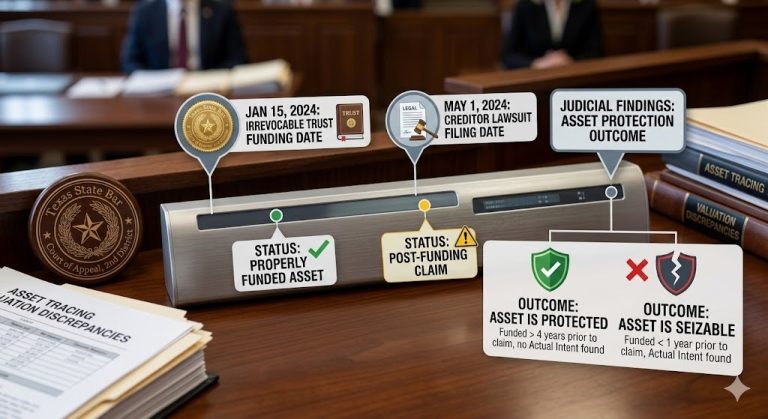
Irrevocable Trust

What is a Trust?

Briefly describe what is a trust.   Now I would like to talk to you about, what is a trust. A trust, no matter what type – irrevocable trust, revocable trust, grantor trust, non-grantor trust -…

Quick navigation

Jump to the section you need

Use these quick links to go straight to the answer, example, or planning point that matters most right now.

  1. Briefly describe what is a trust.
  2. Rocco Beatrice, CPA, MST, MBA, Managing Director, Estate Street Partners, LLC.
  1. Mr. Beatrice is an asset protection award winning trust and estate planning expert.

Briefly describe what is a trust.
 

Protect your assets from lawsuits, divorce, Medicaid.
Now I would like to talk to you about, what is a trust. A trust, no matter what type – irrevocable trust, revocable trust, grantor trust, non-grantor trust – is really nothing more than a contract between you and someone else. If there is a contract between you and I, we can sit down and decide you’re going to do this, you’re going to do that. Therefore, an Ultra Trust® is nothing more than a private contract between you, the person with the money, and your trustee. The trustee is the person who manages the money on behalf of your beneficiaries (i.e. your heir or your children). And the beneficiaries can be you, your wife, your children, anyone you wish, your girlfriend, boyfriend, dog, cat, whatever. It’s whomever you desire.
 
Continue to read part 4 of 11 on the Ultra Trust® benefits as one of the best irrevocable trust plans for asset protection here: Ultra Trust&reg Asset Protection Plan


Rocco Beatrice, CPA, MST, MBA, Managing Director, Estate Street Partners, LLC.


Mr. Beatrice is an asset protection award winning trust and estate planning expert.


To learn more about irrevocable trusts and senior elder care visit:
 

Related resources

After reading What is a Trust?, most readers want a clearer next step: which structure answers the same problem, what timing changes the result, and where the practical follow-up questions usually lead.

What people compare next

The next question is usually not abstract. It is whether a trust, an entity, or a different planning step does the real job better in your situation.

What often changes the answer

Timing, ownership, funding, and how much control you want to keep usually matter more than labels alone.

When a conversation helps more

Once structure, timing, and next steps start intersecting, it usually helps to talk through the options in the right order.

Explore Asset Protection Trust

See how trust-based planning is used to protect wealth, organize control, and support long-term decisions.

Explore Irrevocable Trust

Understand how irrevocable trust planning works, when people use it, and what tradeoffs usually matter most.

Explore How It Works

Follow the planning process from consultation through drafting, funding, and the next practical steps.

Explore Ebook

Download the guide for a longer walkthrough you can read at your own pace and revisit later.

Explore Main Blog

Browse more practical articles, comparisons, and next-step guidance across the full UltraTrust blog.

Explore Contact

Reach out when you want to talk through timing, structure, and the next steps that best fit your situation.

What people usually compare next

Most readers compare structure, timing, control, and the practical next step after narrowing the issue in the article above.

What usually makes the answer more specific

Actual ownership, funding, current exposure, and how much control someone wants to keep usually matter more than labels in isolation.

When another step helps more than another article

Once timing, structure, and next steps start overlapping, it often helps to talk through the sequence instead of trying to compare everything mentally.

Questions readers usually ask next

Clear answers make it easier to compare structure, timing, control, and the next step that fits best.

What usually matters most before moving ahead with a trust-based protection plan?

Most people get the clearest answer by looking at timing, current ownership, funding, and how much control they want to keep. Those points usually shape the next step more than labels alone.

How do readers usually decide which related page to read next?

Most readers move next to the page that answers the practical question left open after the article, whether that is lawsuit exposure, business-owner risk, trust structure, cost, or how the process works.

When does it help to compare more than one structure instead of stopping with one article?

It usually helps as soon as the decision involves more than one concern at the same time, such as protection, control, taxes, family planning, or business exposure. That is when side-by-side comparison becomes more useful than reading in isolation.

What makes the next step feel more practical and less theoretical?

The next step feels more practical once the discussion turns to actual assets, ownership, timing, and the sequence of decisions that would need to happen in real life.

Ready to take the next step?

Get clear guidance on trust structure, planning priorities, and the next move that fits your assets and goals.