

One of the strongest asset protection strategies available is the irrevocable trust. Learning how to create an irrevocable trust offers valuable asset control with no concern for further personal liability.
An irrevocable trust allows you to transfer ownership of your assets and enjoy benefits from them by your beneficiaries. A charitable trust is an irrevocable trust which modified or changed soon after established, unlike revocable trusts.
This article covers the basics of irrevocable trusts, legal considerations, types of irrevocable trusts, how to set one up, and how to manage one. You will gain clarity on the ins and outs of irrevocable trusts for maximum impact in this course.
An Overview of Irrevocable Trust: Basics and Significance
An irreversible trust defined as an organization made by the grantor who transfers assets to the trust and no longer owns those assets. An irreversible trust will also name a beneficiary and dictate the terms of the trust.
Important Characteristics
- Asset Protection protects your wealth from creditors and lawsuits.
- Tax Benefits: Estate and gift taxes apply to certain qualifying assets.
- Legal enforcement means that once created, it is very difficult to change.
- Importance of Establishing a Trust Without Withdrawal Rights.
- Estate Planning: Makes sure your wishes are respecte with how your assets pass.
Trusts can preserve eligibility for certain government programs including healthcare and Medicaid.
| Feature | Description |
| Ownership Transfer | Grantor relinquishes control of assets |
| Revocability | Cannot be revoked or modified without court approval |
| Beneficiaries | Specified individuals or organizations |
| Tax Implications | May reduce estate or gift taxes |
Irrevocable trusts are beneficial for high-net-worth individuals, business owners and families looking for long-term security.
Legal and practical matters to consider
How irrevocable trusts work
To create an irrevocable trust, the grantor transfers his/her assets under the terms of a trust which is stated in a document.
Through asset transfer, legal ownership is transfer to the trust, restricting access to the grantor. The trust has reporting and tax filing obligations in some states.

Common Types of Trusts
Life Insurance Trust: This is where your life insurance policies are held to reduce estate taxes.
A charitable trust is an arrangement that supports nonprofit organizations and offers the donor tax benefits.
The Trust protects your assets to qualify for Medicaid
Getting the trust that suits your needs may be a complex process, yet it is crucial for successful estate planning.
Trust Type Purpose Main Feature
Use of an irrevocable life insurance trust helps protect life insurance policy proceeds from estate taxes. In addition, it basically removes assets from your taxable estate.
Charitable Remainder Trust Helps you offer a charity support and income stream along with tax deduction benefits for a charitable contribution.
Medicaid Asset Protection Trust helps you achieve Medicaid eligibility while protecting your assets.
Case Report
- An irrevocable life insurance trust was created by a business owner.
- The proceeds of a life insurance policy were exempt from estate tax.
- Payouts went straight to beneficiaries without probate.
- A trustee managed the assets to ensure their distribution and compliance.
Asset flow in irrevocable trusts
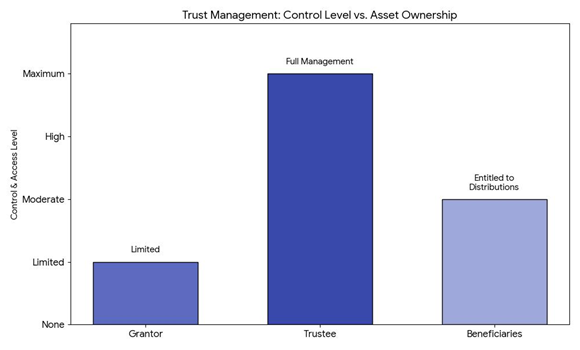
- The Trustee has ultimate authority over the assets of the Trust and is fully responsible for managing them in accordance with the terms of the agreement.
- After creating a trust, the Grantor will have some Limited control over it in order to clearly separate the person creating the trust from the trust property.
- Beneficiaries can influence asset management and are considered the primary entitlement holders, meaning they ultimately receive value from the trust as distributions are primarily made to them.
Effective Tactics for Establishing an Irrevocable Trust
Comprehensive Tutorial
Establish Your Goals: Determine if you need asset protection, tax mitigation, or Medicaid planning.
Pick a person or entity who will manage your assets as a trustee.
Prepare a Trust Agreement: Prepare the legal document, specifically written and authorized by law.
Effective use tips
Check with a qualified estate-planning attorney regarding state rules.
Check the trust from time to time to make sure it still meets your needs as your financial and family situation changes.
These steps help you ensure the trust will operate as you intend, achieving your estate plan objectives.
Final thought
An irrevocable trust can offer a lot of excellent advantages for asset protection and estate planning.
By understanding how do you create an irrevocable trust, UltraTrust helps you make informed decisions on asset allocation, tax efficiency, and beneficiary distributions. The success of your trust depends on proper drafting, careful trustee selection, and effective ongoing management.
An irrevocable trust set up for life insurance, charitable giving, and Medicaid planning. Likewise, it assures that your wealth is preserve. When you take proactive steps, you protect your financial legacy. Taking these steps also helps in protecting your loved ones while minimizing legal or tax problems in the future.
Common questions about this article
These answers summarize the topic in plain English so readers can move from the article into the next practical planning page.
What is the main takeaway from "How Do You Create an Irrevocable Trust"?
One of the strongest asset protection strategies available is the irrevocable trust. Learning how to create an irrevocable trust offers valuable asset control with no concern for further… The article is meant to give readers a practical understanding of the issue so they can connect the topic to planning decisions instead of treating it as an isolated legal phrase.
Who should read this article?
This article is usually most useful for readers who are trying to understand Create an Irrevocable Trust before making a trust, ownership, or asset protection decision and want a clearer explanation in everyday language.
Why does this topic matter in broader planning?
Topics like this matter because one misunderstood issue can change how readers think about timing, control, funding, or exposure. Articles like this help turn a broad concern into a more focused next step.
What should readers compare after finishing this article?
Most readers go next to a related trust page, a comparison page, or another article in the same category so they can test the idea against a larger planning framework before deciding what to do next.