Protecting Your Business Assets and Interests From Divorce

What is the best way to control premartial assets?
Would-be newlyweds these days have a lot to worry about, particularly when it comes to retaining control of property and assets. The line between marital assets and separate property is becoming thin due to case law and the way some jurisdictions handle divorce proceedings. This potential concern has led to the popularity of prenuptial agreements and other premarital contract, which are not always the best instruments for their intended purpose.
In the United States, prenuptial agreements are legally recognized in many jurisdictions by virtue of the Uniform Premarital and Marital Agreements Act, which saw its first draft in the mid-1980s. Since then, many states have adopted the Act, although there are still sharp differences with regard to intended scope and the degree to which prenuptial agreements can be enforced in some jurisdictions. Therein lies a major problem with prenupl agreements: They are not always guaranteed to work as planned.
There is a better legal instrument that engaged couples can use in lieu of prenuptial agreements. An irrevocable trust has many advantages over a prenuptial agreement, and it provides remarkable asset protection in comparison. One of the best features of irrevocable trusts is that their creators, known as grantors, are able to retain control of their property and assets at all times, even when things seem to get out of control during a divorce.
Understanding Separate Property in Divorce Proceedings
Seeking agreement on property, assets and income issues is at the heart of most prenuptial agreements. Modern life has gotten a bit complicated, and thus there is a valid need for people to settle issues related to property and assets before they get married.
Prenuptial agreements are essentially contracts that establish what couples wish to retain as separate property. Although statutes in various states differ on the concepts of how property is divided during marriage dissolution proceedings, the general idea of separate property follows the principles below:
- Property owned prior to marriage is separate.
- Inheritances are considered separate assets.
- Gifts made by third parties as well as compensation from personal injury judgments should be considered separate from marital assets.
Any other assets acquired after the wedding would generally be considered marital property, although state law has the final say based on principles of equitable distribution and community property. If you live a community property state such as California, Texas, Arizona, Washington, Nevada, Louisiana, Wisconsin, or Idaho, you can through these rules out the window. Many couples in these state even with a prenup had their prenups rendered worthless by the courts.
In addition, outlining separate property on a prenuptial agreement in general does not leave couples off the hook with regard to state law or to the circumstances of married life. Separate assets listed on a prenuptial agreement can become marital property if their integrity is changed during the marriage; for example, adding a spouse as a co-borrower in the mortgage of a home purchased before marriage just to get a lower rate on a refinance. The same goes for money that was inherited and deposited into a joint savings account.
In a way, getting married is tantamount to ceding control of your property to the laws of the state whether you get a prenup or not. A good way to illustrate this is the issue of appreciation of separate property. The divorce statutes of many states consider the increase in value of separate assets to be marital property. For example, a woman who wants to keep a portfolio of blue-chip stocks as separate assets might have to split the gains of the share prices and even dividends paid when she heads to divorce court. A similar example would be a vacation home in an active housing market that appreciated in value before the marriage dissolution.
Keeping Control of Separate Assets with an Irrevocable Trust
To some extent, all couples who walk down the aisle have a prenuptial agreement even if they did not actually sign one. The divorce laws of each state act as a prenuptial agreement in the sense that the newlyweds agree to divide up their property according to statute and renounce control by turning it over to the state and the courts.
The most tangible way to retain control of assets before, during and after a marriage is to use an irrevocable trust. These instruments are regarded as being the most effective tools of asset protection and estate planning, and they are superb alternatives to prenup agreements.
With an irrevocable trust, a future groom or bride assigns ownerships of his or her assets to a legal contract that stipulates who gets the benefit of separate property. The other party does not have to sign or go through the awkward and unromantic process of a prenuptial agreement. Spouses do not need to know about the assets kept in the trust, either; the separate property does not have to disclosed.
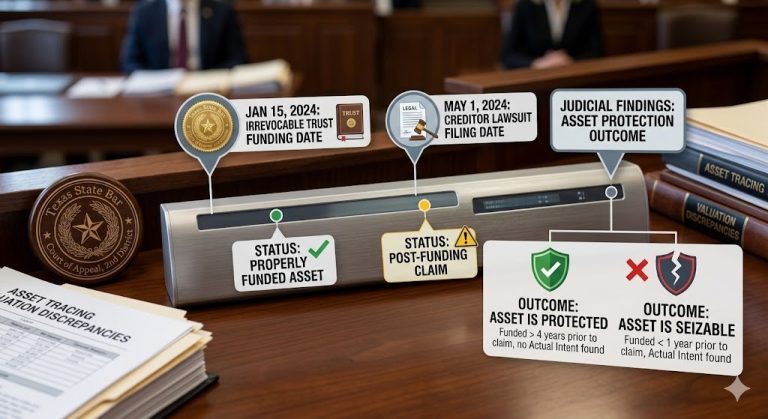
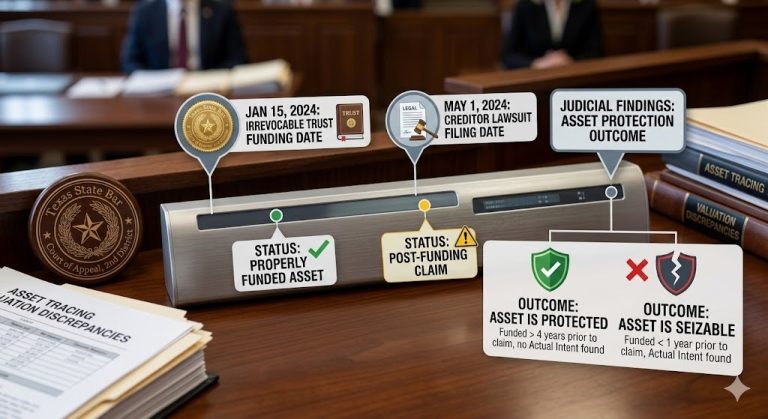
In case of a divorce, the assets kept in an irrevocable trust do not come into play. A judge will only look into the trust to ensure that no marital assets were surreptitiously transferred therein.
The grantor who created the trust is free to call the shots with regard to the assets he or she brought to the marriage at any time. By executing an irrevocable trust, a grantor effectively asserts full control over property, even when going through a divorce or other difficult situations.
To find out more about how irrevocable trusts can make a difference in your life and allow you to retain control of your property at all times, please contact UltraTrust.com today.