

A trust is an estate planning tool that allows a person to transfer their asset to a trustee who manages the asset for another – the beneficiary. The beneficiaries of a trust are the people who will ultimately get and pay the benefits of the trust. In this article, we will do a deep dive into the powers of how trust beneficiaries work, their rights and duties and estate planning as a whole.
If you have been named as a beneficiary or are setting up a trust, it pays to understand a lot more about…. Depending on whether the trust can be revoked or not, the terms of the grantor will determine how the trust operates and further what the beneficiary is entitled to receive.
Who is a trust beneficiary?
A trust beneficiary is an individual, group, or organization with the right to use the benefits of a trust. Trust usually holds various assets like financial assets, a house or property. When a trust is created, the person making the trust appoints the beneficiaries and states what they will receive. Trusts assure that property will be held and given on a basis which will assure that the use of the asset and ultimate transfer on death will be made in accordance with your wishes.
Behavior of Trust Beneficiaries
The beneficiaries first in line shall receive benefits from the trust. Usually, the primary beneficiaries will receive property when the grantor dies or, depending on what the trust agreement provides, when the grantor is still alive.
In the event that the primary benefactor cannot receive the assets, due to dying or incapacity, the contingent benefactor will receive them.
Grantors create some trusts to benefit charitable organizations. The charitable trust, as directed by the trust deed, sends assets to charities.
Some jurisdictions refer to qualified beneficiaries as people who are either to receive distributions from the trust or have the right to notification of the trustee’s actions.
Importance of beneficiaries of Trusts
Trust Beneficiaries Work are a key aspect, as the trust must benefit them in some way. Generally, the trust will designate certain individuals or entities as beneficiaries. The rights of the trustee may change as per the nature of the trust and the provisions of the grantor. General beneficiaries of irrevocable trusts have more determined rights than those of revocable trusts. In the second case, the beneficiary becomes entitled only after the death of the grantor.
Rights and Duties of Trust Fund Beneficiaries
The beneficiaries of a trust have fair significant rights and obligations in terms of understanding how the trust functions. These rights are usually set out in the trust agreement and regulated by state law.
Beneficiaries possess rights within a trust
The beneficiaries are entitled to be informed of the existence of the trust, its terms and the management of the trust. Beneficiaries must be informed from time to time about the trust property and its distributions.
The beneficiaries have a right to the distributions provided by the trust (the beneficiary’s beneficiaries are also included). The trust may distribute net income, principal or both depending on the terms of the trust.
As a beneficiary, you can contest a trust if the trustee fails to administer the assets properly or does not carry out the grantor’s intent.
Beneficiaries have a right to hold the trustee liable for mismanagement. Trustees can never disobey a beneficiary’s expectation; must always do what is reasonable to the beneficiary. Trustee failure to perform can lead to the beneficiaries bringing an action against them.
Obligations of Trust Beneficiaries
The beneficiaries must comply with the requirements of the grantor’s trust instrument. This may involve meeting some conditions attached to the distributions (like receiving distributions only for certain purposes).
The beneficiaries of the trust are the recipients of distribution and are capable of incurring taxes that are due. Depending on the type of trust, the trustee issues a Form K-1 to beneficiaries for income tax purposes, and it must report any distributions on their tax returns.
The beneficiaries should familiarize themselves with the trust and ensure the proper implementation of the trust. If the grantor believes the trustee is not managing the trust’s assets according to his instructions, he may need to step in.
Trust Types: Understanding the Benefits of Different Kinds of Trusts
The perform often have different roles and depending on the type of trust in place have different rights.
Beneficiary’s Primary Insurance and Performance Bonds and Guarantees Must Know How Each Functions Trusts vary and their differences impact how a beneficiary may act.
Owner of a To-Be-Registered Trust Has No Beneficiary Rights
| Trust Type | Beneficiary Access | Grantor Control | Tax Treatment |
| Revocable Living Trust | Beneficiaries receive assets upon the grantor’s death | Grantor retains control during lifetime | No tax implications until death |
| Irrevocable Trust | Beneficiaries receive distributions according to the trust terms | Grantor loses control over assets | Assets are removed from the grantor’s estate |
| Testamentary Trust | Beneficiaries receive assets after the grantor’s death, based on the will | No control during the grantor’s lifetime | Subject to estate taxes |
| Charitable Trust | Beneficiaries are charitable organizations | No control for the grantor, irrevocable | Potential for tax deductions for the grantor |
Beneficiary Rights Across Different Trust Types
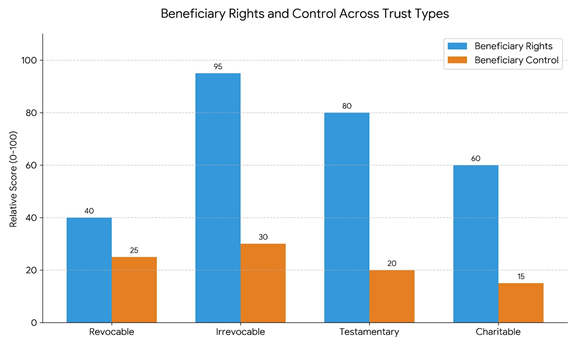
- The beneficiaries for whom an irrevocable trust was established receive the most rights (95) since once established the transfer is permanent and the grantor cannot as easily amend the provisions of the trust.
- Beneficiaries view the incorporation as weak in protecting rights (40) and control (25) because the grantor retains full authority to amend or revoke the trust at any time. Therefore, revocable trusts are conditional by nature.
- The powerful rights of beneficiaries (80) of a testamentary trust come into effect only on the death of the grantor. Control is low as the trustee must follow the will’s instruction precisely.
How to choose the right trust for beneficiaries?
Selecting a trust suitable for the beneficiaries is an estate planning process. When making a choice you must consider the following.
1. Take into account the beneficiaries
Understand what your beneficiaries might need in terms of finances and other personal matters. Some people will need access to funds right away while others will benefit from a structure that allows for payment over time. Charitable trusts are ideal if you are looking forward to making a donation for a charitable cause.
2. Determine the quantity of flexibility a person needs
To retain control over the assets within the trust prior to your death, the trust must be revocable. If you want protection against creditors for your estate or perhaps a reduction in estate tax, an irrevocable trust may be your best option.
3. Seek Help from some Estate Planner
Making the trust decision is never easy. Working together with an estate planning attorney, though, can help. A trust can also play an important role if you want to streamline asset management. It ensure that your beneficiaries receive proper support.
So what does a trust beneficiary mean?
To sum up, understanding how trust beneficiaries work is beneficial not only for creators of a trust but also for the beneficiaries work. UltraTrust Although trusts provide great advantages for asset distribution, tax planning, and asset protection, there is a difference in rights and responsibilities of a beneficiary.
Your choice of trust and designated beneficiaries helps ensure that your estate follows your intentions. A meeting with a professional estate planner is critical to crafting a plan to protect your assets and your beneficiaries’ interests. As a beneficiary or a grantor, understanding your rights and duties will guarantee that your estate plan works out as you intend.